
Why Orbit Analytics?
Flexible Analytics For The Way Your Enterprise Already Works.
Orbit helps enterprises modernize reporting and analytics without forcing a rip-and-replace approach. You can analyze data where it lives, connect across complex systems, and build on the BI, data platform, and enterprise technology investments you already trust. Use Orbit BI, your existing BI stack, or both—Orbit gives customers the flexibility to choose the model that fits their business best.
Most organizations do not need another rigid analytics platform. They need flexibility: the ability to work with data across ERP, operational, and cloud systems; to support different user needs; and to modernize without discarding existing tools, workflows, or platform investments. That is where Orbit fits best. Orbit gives customers a practical, enterprise-ready way to deliver analytics on top of the environment they already have.


Why organizations choose Orbit?
At its Core, Orbit gives customers choice
A lot of platforms are built around forcing standardization. Orbit is built around enabling progress. The philosophy is simple: customers should not have to reshape their business around the tool. The tool should adapt to the customer. That means Orbit is designed to support different architectures, different user preferences, and different stages of data maturity. Customers can move at their own pace, adopt Orbit where it adds the most value, and preserve the tools and investments that already work well for them.
Strategically, Orbit protects and extends what you have already built
Enterprises have already invested heavily in ERP systems, enterprise data platforms, BI tools, and business processes. Orbit is designed to work with that reality, not against it. Instead of asking customers to standardize on a single rigid path, Orbit gives them the flexibility to run analytics from where their data lives and to extend the value of their current technology stack. That makes Orbit especially compelling for organizations that want modernization without unnecessary disruption.
Technically, Orbit is built for flexibility
Orbit’s value is not just that it delivers analytics. It is that it lets customers choose how analytics gets delivered.
With Orbit, organizations can:
- Analyze data directly where it resides
- Connect across ERP, cloud, and operational systems
- Use Orbit BI or your Enterprise BI where it makes sense
- Continue using existing BI tools where those are already embedded in the business
- Build on preferred enterprise data platform investments rather than replacing them
This flexibility matters because most enterprises are not greenfield environments. Some teams want governed self-service in Orbit. Others want to keep using existing dashboards and semantic layers. Others need to align analytics with a broader enterprise data platform strategy. Orbit supports all three.
Where Orbit fits best?
Orbit is a strong fit for organizations that:
- Want to modernize ERP reporting and analytics without replacing everything they already use
- Need analytics to run close to where their data lives
- Want the option to use Orbit BI, existing BI tools, or a combination of both
- Have already invested in an enterprise data platform and want to maximize that investment
- Need a more flexible analytics layer across Oracle, cloud, and operational systems
- Want governed self-service without forcing one architecture on every team


At its Core
At its Core, Orbit gives customers choice
A lot of platforms are built around forcing standardization. Orbit is built around enabling progress. The philosophy is simple: customers should not have to reshape their business around the tool. The tool should adapt to the customer. That means Orbit is designed to support different architectures, different user preferences, and different stages of data maturity. Customers can move at their own pace, adopt Orbit where it adds the most value, and preserve the tools and investments that already work well for them.
Strategically
Strategically, Orbit protects and extends what you have already built
Enterprises have already invested heavily in ERP systems, enterprise data platforms, BI tools, and business processes. Orbit is designed to work with that reality, not against it. Instead of asking customers to standardize on a single rigid path, Orbit gives them the flexibility to run analytics from where their data lives and to extend the value of their current technology stack. That makes Orbit especially compelling for organizations that want modernization without unnecessary disruption.
Technically
Technically, Orbit is built for flexibility
Orbit’s value is not just that it delivers analytics. It is that it lets customers choose how analytics gets delivered.
With Orbit, organizations can:
- Analyze data directly where it resides
- Connect across ERP, cloud, and operational systems
- Use Orbit BI or your Enterprise BI where it makes sense
- Continue using existing BI tools where those are already embedded in the business
- Build on preferred enterprise data platform investments rather than replacing them
This flexibility matters because most enterprises are not greenfield environments. Some teams want governed self-service in Orbit. Others want to keep using existing dashboards and semantic layers. Others need to align analytics with a broader enterprise data platform strategy. Orbit supports all three.
Where Orbit Fits Best?
Orbit is a strong fit for organizations that:
- Want to modernize ERP reporting and analytics without replacing everything they already use
- Need analytics to run close to where their data lives
- Want the option to use Orbit BI, existing BI tools, or a combination of both
- Have already invested in an enterprise data platform and want to maximize that investment
- Need a more flexible analytics layer across Oracle, cloud, and operational systems
- Want governed self-service without forcing one architecture on every team
The Orbit advantage
Run analytics where your data lives and choose the delivery model that fits your organization.
Build on your current BI tools, enterprise data platform, and reporting workflows instead of replacing them.
Use Orbit BI as a powerful analytics layer where it adds the most value
Keep leveraging existing BI environments already adopted across the business.
Support different teams, architectures, and modernization strategies without forcing a one-size-fits-all approach.
Orbit is a strong choice for enterprises that want modern analytics without rigid tradeoffs. It gives customers the freedom to analyze data where it lives, the option to use Orbit BI or existing BI investments, and the ability to align with their preferred enterprise data platform strategy. That makes Orbit not just a reporting solution, but a flexible analytics foundation for real-world enterprise environments.


250,000+ Users Globally. One Trusted Platform.
We have helped our customers from various industries and geographies to succeed and thrive.


What Enterprise Leaders Say About Orbit Analytics
Viant Medical replaced Oracle Discoverer and modernized Oracle EBS with Orbit — effortlessly.
Genworth achieved a seamless migration from Oracle Discoverer to Orbit.
Our Blogs
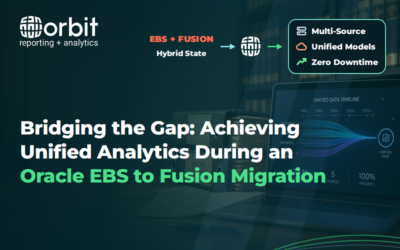
Bridging the Gap: Achieving Unified Analytics During an Oracle EBS to Fusion Migration
The myth of the overnight cloud migration is one of the most pervasive—and financially damaging—misconceptions in enterprise technology today. Vendors have historically sold C-suite leaders the utopian vision of a seamless "go-live" weekend. The narrative suggests...
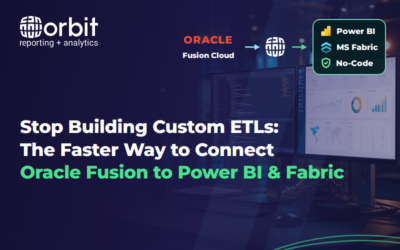
Stop Building Custom ETLs: The Faster Way to Connect Oracle Fusion to Power BI & MS Fabric
For Chief Data Officers, IT Directors, and BI Architects, the mandate this year is clear: democratize enterprise data and accelerate actionable intelligence. As organizations rely on Oracle Fusion Cloud for critical operations, integrating this rich transactional data...
From Manual to Magical: Automating Month-End Close with AI-Powered Excel Reporting
It is 11:45 PM on a Friday. The office is largely empty, but the finance department is still glowing with the blue light of a dozen monitors. This is the month-end close—a period that should be the strategic highlight of the financial calendar, yet for too many...
See how Orbit fits into your analytics ecosystem
Whether you want to extend your current BI stack, activate your enterprise data platform, or adopt Orbit BI, Orbit gives you the flexibility to move forward on your terms.
